Reach diagnosis
LinkedIn Reach Dropped: What Changed and What to Do
Our founder Bhavik Sarkhedi, a serial entrepreneur and personal branding consultant, has watched the reach on his LinkedIn account move up and down and has posted publicly about it. One of Bhavik's posts said that if your reach suddenly dropped you are not imagining it, and that trying to hack an algorithm that changes every week wastes time. We stand by the second half. The first half deserves more care: a drop can come from the platform, from your content, or from both, and the fix is different for each.
This post separates three things. What outside researchers measured, what LinkedIn itself has said, and what is our opinion, drawn from our founder's use of the platform for over eleven years. If you only want the audit, jump to the ten-post audit below. If your issue is that nobody in your target group sees you, read the post on how clients search on LinkedIn as well.
If your LinkedIn reach dropped, first check whether everyone's did. A study of 1.8 million posts reported organic reach down by almost half, and LinkedIn rebuilt how its feed ranks posts. Then audit your last ten posts for topic drift, links, engagement bait and gaps in posting before you change anything.
What the data says about LinkedIn reach dropped
The most quoted study is Richard van der Blom's Algorithm Insights Report, based on 1.8 million posts. In the launch post for its first chapter he wrote that organic reach was "slashed by almost 50%" and that organic reach for Company Pages was barely surviving. The same post lists other findings: most use is on mobile with short sessions, and saved posts now drive future reach, which he presents as more valuable than likes.
Treat the numbers with care. Van der Blom sells LinkedIn training and consulting, and the full report is paid, so a dramatic headline helps him. His post does not explain how the 50 percent figure was calculated, and it says the findings are a guideline, not guaranteed facts. Other studies measure a smaller fall: an AuthoredUp analysis, reported secondhand, put the average reach decline at 34 percent. Different samples, different sizes, same direction.
The honest summary is this: several independent counts show organic reach falling on average, the size is disputed, and an average hides the fact that some accounts rose while others fell.
What LinkedIn itself has said
LinkedIn published an engineering post describing a rebuilt feed that uses large language models to find and rank posts. As summarised by Social Media Today, the key points are:
- The system weighs recent activity more heavily than past engagement, so your feed changes from visit to visit.
- It links related topics. LinkedIn's own example is that an interest in electrical engineering can connect to content about small modular reactors, which a keyword match would miss.
- LinkedIn plans to cut engagement bait and to downrank recycled thought-leadership posts. It named prompts such as Comment 'Yes' if you agree.
- Creators should have more chances to reach interested audiences, and timely posts can surface within minutes, not hours.
The same coverage notes that because every feed is now more personal, reach per post could fall even when relevance improves. We could not read the original engineering post, only trade summaries of it, so quote LinkedIn's wording from the original if you need it exactly.
What LinkedIn has not said, in anything we read: that it lowers reach to push people toward paid promotion, or that it applies a hidden penalty to individual accounts. Both are opinions people hold, not documented facts.
Our view: reach, boosts and why to stop chasing the algorithm
This is our opinion, not LinkedIn's. In a LinkedIn post, Bhavik wrote that LinkedIn follows a pattern every social platform follows: give everyone large reach, get everyone posting, slowly reduce the reach and then add a boost button. We believe that pattern, but we cannot prove LinkedIn's motive, and LinkedIn has not confirmed it.
What we know from experience is practical. A post is not written to be popular. In the same post Bhavik said that if you are a founder, you are posting so people trust you, and so they think of you when they need what you sell. That changes what you measure. A drop in impressions matters less than whether the right twenty people still see you and some of them write to you. If you only measure the number, every platform change feels like a loss.
What our founder told his followers
if you’re a founder, you’re not posting to be popular. You’re posting, so people trust you.From our founder's LinkedIn post
Diagnose your drop: symptom, likely cause, test, fix
| What you see | Likely cause | How to test it | What to do |
|---|---|---|---|
| Everyone you follow reports a drop | Platform change | Ask five peers in your field for their last month of impressions | Keep posting; do not rewrite your whole approach |
| Only your account dropped | Your content changed | Compare your last ten posts with the ten before | Return to the topics that did best |
| Posts with a link do worse than posts without | Link in the post body | Post the same idea once with the link in a comment and once without, a week apart | Test it on your account; one study reported a reach penalty for links, from a secondary source |
| Impressions fell after a long gap | A stop-start posting pattern | Check the dates of your last twenty posts | Choose a rhythm you can keep |
| Comments are generic or from the same few people | Engagement bait or a small circle | Read the last twenty comments | Remove prompts like 'comment yes if you agree' |
| You post on many topics | Topic drift | List the topic of each post in one word | Pick two topics and stay on them for a month |
| Reach is fine but nobody writes to you | A reach problem has become a conversion problem | Count enquiries, not impressions | Fix the profile and the next step, see the profile guide |
The link penalty figure that circulates online comes from van der Blom's data as repeated by blogs; We could not read the original, so test it yourself instead of trusting a percentage.
The 10-post audit, in 30 minutes
Export your last ten posts into one sheet
Write the date, topic in one word, format (text, image, video, document), whether it had a link, impressions and comments.
Mark the posts that reached your target readers
A post with high impressions but no one from your field is not a win. Look at who commented.
Find the pattern in your best three
Same topic? Same format? Posted at a similar time? Note the pattern in one sentence.
Find the pattern in your worst three
Often the cause is plain: a link in the body, a vague hook, or a topic you rarely post about.
Check your rhythm
List the gaps between posts. LinkedIn's engine weights recent activity, so long gaps cost you.
Read your comments for bait
If you ended posts with a prompt that exists only to get replies, remove it.
Write next week's plan from the pattern
Three posts built like your best three. Run the plan for four weeks before judging.
A worked audit
Reading a ten-post audit
Ten posts. Four on leadership, three on hiring, two on a festival, one on a product launch. Two posts carried a link in the body. Impressions on those two were the lowest. Two weeks passed with no post. Comments on the best post came from three people in the same city.
Decision: stay on hiring and leadership for the next month, drop festival greetings, move links into the first comment, post twice a week at the same times, and reply to every comment within a day. Judge the plan after four weeks by enquiries from the target group, not by impressions.
A reply that fixes the wrong problem, and one that fixes the right one
Responding to a drop in impressions
'My reach fell, so I will post every day and add a comment-for-the-link prompt to every post.'
'My reach fell. I will keep my rhythm of three posts a week, stay on hiring and leadership, move links to the first comment and count enquiries from operations heads for four weeks.'
What to do instead of hacking
Accept that the feed is personal to each reader and that LinkedIn updates it often. Build things that do not depend on the feed: a profile that converts visitors, a newsletter that notifies subscribers directly (see the newsletter strategy post), a Featured section that proves your work (guide) and a Services section that gives buyers a way to ask (guide).
In that post Bhavik gave three instructions that still hold: share behind-the-scenes, teach people something you know, and keep going because the algorithm will change again. They sound simple because they are. Posting steadily with a clear topic matters more than finding a trick, and our founder's short video on the subject says the same: posting every day is not a strategy.
Our founder's shadow ban experiment
In another post Bhavik wrote that he wanted to test whether a LinkedIn shadow ban is real or a myth. He posted around fifteen original videos over a few weeks, each planned, edited and posted at regular intervals, with no tricks, and said that if none of them reached even a fraction of his 16,000 followers, something might be off in how the platform works.
We did not find LinkedIn describing a shadow ban in the pages we read for this guide, so we will not tell you one exists. What we do recommend is the same kind of test, scaled to you: pick one topic and one format, post at fixed times for four weeks, then compare. Judge by reach among the people you want to reach. If it falls to almost nothing despite a complete profile and varied reactions, ask LinkedIn support and ask peers in your field whether they see the same. Do not assume a penalty from one weak month.
When to adapt and when to wait
Adapt now when
- Your last ten posts have no shared topic.
- Most of your posts carry a link in the body.
- You ended posts with prompts that beg for comments.
- You posted in bursts with long gaps.
Wait and keep your rhythm when
- Peers in your field report the same fall.
- Your topic and format have not changed.
- Enquiries are steady even though impressions fell.
- You have changed your approach in the last two weeks and have not yet had time to see the result.
The numbers we would use, with their limits
Before you blame the algorithm
- I asked five peers if their reach fell too.
- I listed the topic of my last ten posts in one word each.
- I checked which posts had a link in the body.
- I removed prompts that exist only to get comments.
- I checked the gaps between my posts.
- I counted enquiries, not only impressions.
- I wrote a four-week plan built on my best three posts.
- I did not change everything at once.
Teams, leaders and company pages
If your reach problem is a team or company, the reported pattern is harsher for Company Pages than for people. Van der Blom's post calls Company Page reach barely surviving, and a test by an employee advocacy software company found that most of the first posts in four feeds came from people in the user's network, not from company pages. That vendor sells advocacy software, so read it as a test, not a rule. The practical response is to train people to post under their own names with guidance from the company, which is what we teach in corporate LinkedIn training and in training for leaders. For individuals, LinkedIn training and the profile optimization guide cover the audit above with your own posts.
On video
Watch it explained
Videos from our founder’s YouTube channel. Each one loads only when you press play.
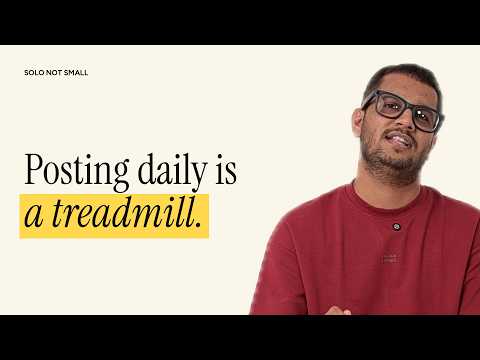
On LinkedIn
What our founder has posted about this
 Bhavik SarkhediPost on LinkedIn
If your LinkedIn reach suddenly dropped… You’re not imagining it: LinkedIn wants you to pay now. It’s the same pattern every social platform follows: → Give everyone big reach → Get everyone posting → Slowly reduce the reach And...
From our founder's LinkedIn: the post on what to do when your reach suddenly drops.
Bhavik SarkhediPost on LinkedInExperiment time. I’m sharing this video as part of my personal branding journey but also to test something bigger: is LinkedIn’s shadow ban real or just a myth? Over the past few weeks, I’ve dropped around 15 original videos...
From our founder's LinkedIn: the post where he set up his shadow ban test.
Questions people ask
Why has my LinkedIn reach dropped suddenly?
There are three common causes: a platform change, a change in what you post, or a gap in posting. A study of 1.8 million posts reported organic reach down by almost half, and LinkedIn has rebuilt its feed ranking. Compare your last ten posts with the ten before to see which applies.
Is LinkedIn limiting my reach on purpose?
LinkedIn has not said so in anything we read. Some people believe platforms reduce reach to sell promotion; we hold that view as an opinion, but it is not documented. LinkedIn did say it plans to cut engagement bait, so check that your posts do not end with prompts that exist only to collect comments.
Does LinkedIn have a shadow ban?
We did not find LinkedIn describing one in the help pages and posts we read. Our founder ran a test of his own with around fifteen videos posted at regular intervals. If your reach is very low despite a complete profile and varied posts, ask LinkedIn support and compare with peers before assuming a penalty.
Do links in the post body reduce reach?
One study attributed to van der Blom reported a reach penalty for external links, but we read it only through secondary sources. Test it on your account: post the same idea twice a week apart, once with the link in the first comment and once without, and compare impressions among your target readers.
How many posts a week should I make?
Choose a rhythm you can keep for months. LinkedIn says its ranking weighs recent activity, so long gaps cost you, but there is no published number of posts that works. Two or three consistent posts a week beats a burst of daily posts followed by silence.
Should I pay to boost posts?
Boosting is a choice, not a fix. If the post has not shown a reason for someone to contact you, paying to show it to more people repeats the problem at a higher cost. Test an organic version first and boost only posts that already lead to replies or enquiries.
What is the best fix for low reach on LinkedIn?
Run the ten-post audit, narrow to two topics, move links to a comment, remove engagement bait and keep a steady rhythm for four weeks. Judge by enquiries from your target group, not by impressions. If reach is fine but nobody contacts you, fix your profile and next step.
Will video bring my reach back?
Not by itself. LinkedIn told Digiday that total video viewership rose, and it called short-form video its fastest-growing category, but a spokesperson would not give specifics on how the algorithm treats video. Test video in your niche for four weeks, with a clear hook, before deciding.
Sources we used
- Richard van der Blom, Algorithm Insights Report chapter 1 launch post (LinkedIn): linkedin.com
- Social Media Today, LinkedIn updates its feed algorithm (summary of LinkedIn Engineering post): socialmediatoday.com
- Digiday, LinkedIn's video push appears to be working: digiday.com
- DSMN8, LinkedIn Organic Reach For Company Pages: Does It Exist?: dsmn8.com
Keep going
Related pages
LinkedIn Video Strategy: What Worked on Our Founder's 250,000-Impression Video
A LinkedIn video strategy from a video that passed 250,000 impressions: what LinkedIn says, our founder's Push or Pause idea, scripts, a four-week plan and checks.
Read →Search from the buyer sideHow to Show Up in LinkedIn Search: What Your Buyer Actually Types
How to show up in LinkedIn search by seeing it as a buyer does: the filters they use, where your words sit, and a 5-query test with a worked example.
Read →Newsletter playbookLinkedIn Newsletter Strategy: Lessons From 100+ Editions
A LinkedIn newsletter strategy from 100+ editions: what LinkedIn documents, what our founder learned, how to launch, what to write, and how to count leads.
Read →LinkedIn trainingLinkedIn Training for Professionals and Small Groups
Live LinkedIn training by LinkedIn Buddy: four modules on profile, search, content and messages, for individuals and small groups, on site or online.
Read →Want a second pair of eyes on your last ten posts?
Send us the link to your profile and tell us who you want to reach. We tell you the pattern we see and what to change first.